
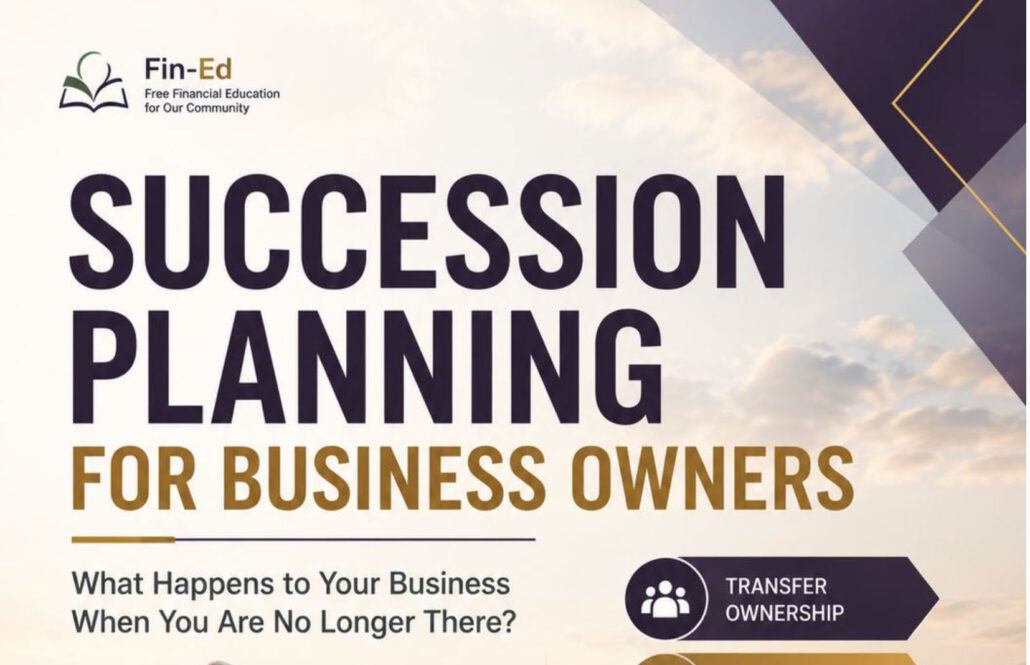
What Happens to Your Business When You Are No Longer There?
Most business owners spend years planning how to start a business, many spend decades planning how to grow it, very few spend enough time planning how they will eventually leave it, yet every business owner will one day exit their business.
Whether through retirement, disability, illness, death, or simply a desire to pursue new opportunities, there will come a time when ownership and leadership need to pass to someone else.
The question is not whether you will leave your business. The question is:
“What will happen when you do?”
That is where succession planning becomes essential.
What Is Succession Planning?
Succession planning is the process of preparing for the transfer of ownership, management, and control of a business.
It provides a roadmap that ensures the business can continue operating successfully when the current owner is no longer involved.
A succession plan should address:
- Who will own the business in the
- Who will manage the
- How ownership will be
- How the transfer will be
- How the owner’s family and estate will be
Without a succession plan, uncertainty often replaces opportunity.
Why Succession Planning Matters
Many business owners assume they will deal with succession planning when they are ready to retire, unfortunately, life does not always provide advance notice.
Unexpected events such as illness, disability, accidents, or death can create significant challenges for a business and the family that depends on it.
A lack of planning can result in:
- Business
- Family
- Shareholder
- Financial
- Loss of business
- Difficulties in settling an
Succession planning helps reduce these risks and provides clarity during uncertain times.
The Biggest Succession Planning Mistake
One of the most common mistakes business owners make is believing that their Will is a succession plan.
A Will is an important estate planning document. However, it does not explain:
- Who will run the
- How ownership will be
- How shareholders will be
- How key decisions will be
A proper succession plan works alongside your Will, not instead of it.
Who Will Take Over the Business?
This is often the most important question. The successor could be:
A Family Member
Many business owners hope that their children will eventually take over the business, while this can work well, it should never be assumed.
The next generation must have both the desire and the ability to manage the business successfully.
Existing Management
In many cases, senior employees or management teams are the most suitable successors because they already understand the business and its operations.
Existing Shareholders
Where there are multiple shareholders, the remaining shareholders may acquire the departing owner’s interest.
An External Buyer
Some owners plan to sell the business to a third party and use the proceeds to fund retirement. Each option requires careful planning and preparation.
Ownership and Management Are Not the Same Thing
One of the biggest misconceptions in succession planning is assuming that ownership and management must transfer together, they are separate issues.
For example:
A child may inherit ownership of a business but not have the skills or desire to manage it.
Similarly, a professional management team may successfully operate the business without owning it.
A successful succession plan considers both ownership succession and management succession.
The Role of Business Valuations
A business valuation is often a critical component of succession planning. Without knowing what the business is worth, it becomes difficult to:
- Structure shareholder
- Plan buy-
- Calculate funding
- Ensure fairness between family
- Plan for
Understanding the value of the business allows owners to make informed decisions regarding future ownership and control.
Buy-and-Sell Agreements
Where a business has multiple shareholders, a buy-and-sell agreement is often one of the most important succession planning tools available.
A properly structured agreement provides certainty regarding:
- What happens when a shareholder
- What happens if a shareholder becomes permanently
- Who can purchase the
- How the purchase price will be
Without a buy-and-sell agreement, surviving shareholders and family members may find themselves in difficult and emotional negotiations.
Funding the Succession Plan
One of the biggest challenges is ensuring that the funds are available when needed. For example:
If a shareholder passes away and the surviving shareholders wish to acquire the deceased shareholder’s interest, where will the money come from?
This is why many succession plans incorporate:
- Buy-and-sell
- Key person
- Business assurance
These arrangements can provide liquidity when it is needed most and help ensure a smooth ownership transition.
Succession Planning and Retirement
For many entrepreneurs, the business represents their largest asset and a significant portion of their retirement capital, a successful succession plan should therefore align with retirement planning objectives.
Business owners should ask themselves:
- When do I want to retire?
- How much income will I need?
- What is my business worth?
- Will the sale of the business fund my retirement?
- What happens if I cannot sell the business when I plan to?
These questions are often best answered years before retirement rather than months before.
Signs That Your Business Needs a Succession Plan
If any of the following apply, succession planning should become a priority:
- You are over the age of
- You have business
- Family members are involved in the
- The business contributes significantly to your personal
- The business depends heavily on your
- You do not have a buy-and-sell
- You have never had your business professionally
The earlier planning begins, the more options become available.
The Ultimate Goal
The objective of succession planning is not simply to prepare for death or retirement, it is to ensure continuity.
A successful succession plan allows:
- The business to continue
- Employees to retain
- Customers to experience
- Shareholders to receive fair
- Families to avoid unnecessary
Most importantly, it protects the value that has taken years to build.
Final Thoughts
Many business owners spend their entire careers creating a successful business but never prepare for the day they leave it.
Succession planning is not about preparing for the end, it is about protecting everything you have worked so hard to build.
Whether your goal is to transfer the business to family members, management, business partners, or an external buyer, the best time to start planning is long before the transition becomes necessary.
Because when succession is planned properly, the business can continue to thrive long after the founder has stepped away.
FinEd Tip: The best succession plans are created while the owner is healthy, actively involved in the business, and has multiple options available. Succession planning done early creates choices. Succession planning done late often creates problems.