
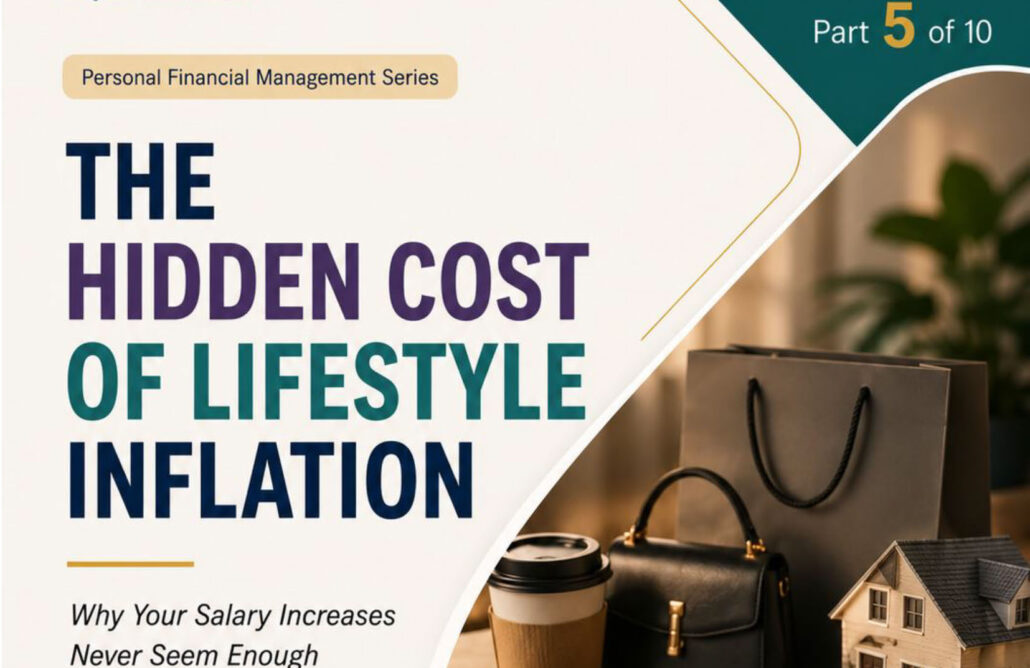
Why Your Salary Increases Never Seem Enough
Have you ever received a salary increase, promotion, or bonus and felt financially better off—only to discover a few months later that nothing has really changed?
If so, you are not alone.
Many people believe that earning more money will automatically solve their financial challenges. Yet despite increasing incomes over time, many individuals still find themselves living from month to month, carrying debt, and struggling to build meaningful wealth.
The reason is often not a lack of income. It is a phenomenon known as lifestyle inflation.
Lifestyle inflation is one of the biggest obstacles to long-term wealth creation because it quietly consumes income that could otherwise be used to build financial security.
What Is Lifestyle Inflation?
Lifestyle inflation occurs when spending increases every time income increases.
As earnings rise, it is natural to want a better lifestyle. A larger home, a newer vehicle, more holidays, premium subscriptions, dining out more frequently, and luxury purchases often become part of everyday life.
While there is nothing wrong with enjoying the rewards of hard work, problems arise when spending grows at the same pace—or faster—than income.
The result is that despite earning significantly more than before, very little additional wealth is
The Lifestyle Trap
Consider two individuals who each receive a R10,000 monthly salary increases.
Person A immediately upgrades their vehicle, increases entertainment spending, and moves into a more expensive home.
Person B continues living largely within their existing lifestyle and invests the majority of the additional income.
Five years later, both individuals earned the same salary increase, yet their financial positions are vastly different.
Person A may have a more expensive lifestyle but little additional wealth.
Person B may have accumulated a substantial investment portfolio, reduced debt, and significantly improved their long-term financial security.
The difference lies not in income, but in how the additional income was used.
Why Lifestyle Inflation Happens
Lifestyle inflation is often driven by emotion rather than necessity. Common triggers include:
Social Comparison
Many people compare themselves to friends, colleagues, neighbours, or personalities.
When others appear to be upgrading their lifestyles, there can be pressure to do the same.
Rewarding Success
After years of hard work, people naturally want to enjoy the fruits of their labour.
The challenge is finding a balance between enjoying today and planning for tomorrow.
Easy Access to Credit
Credit makes lifestyle upgrades appear affordable because people focus on monthly repayments rather than the total financial commitment.
A vehicle, home renovation, or luxury purchase may seem manageable until multiple repayments accumulate.
Gradual Spending Increases
Lifestyle inflation rarely happens overnight, it often occurs through small spending decisions that seem insignificant individually but become substantial collectively over time.
The Cost of Lifestyle Inflation
The true cost of lifestyle inflation is not the money spent today.
The real cost is the wealth that could have been created if that money had been saved or invested. For example:
A R5,000 monthly lifestyle upgrade may seem harmless.
However, if that same amount were invested consistently over many years, the long-term value could be substantial due to compound growth.
Every spending decision involves an opportunity cost.
Money spent today cannot simultaneously be invested for future financial freedom.
Avoiding Lifestyle Inflation
The goal is not to avoid enjoying life or spending money.
The goal is to ensure that your financial progress keeps pace with your income growth. Consider the following strategies:
Save a Portion of Every Increase
Whenever you receive a salary increase, bonus, or additional income, allocate a percentage directly to savings or investments before adjusting your lifestyle.
For example:
- Invest 50% of every salary
- Use bonuses to reduce debt or increase
- Increase retirement contributions
This allows you to enjoy some lifestyle improvements while still building wealth.
Maintain a Gap Between Income and Spending
Wealth is often created in the gap between what you earn and what you spend. As income increases, focus on widening that gap rather than eliminating it.
The larger the gap, the greater your ability to save, invest, and achieve financial independence.
Avoid Upgrading Too Quickly
Before making major financial commitments, ask yourself:
- Is this a need or a want?
- Will this improve my quality of life significantly?
- Can I comfortably afford it?
- What impact will this have on my long-term financial goals?
Sometimes delaying a purchase by a few months provides valuable perspective.
Focus on Financial Assets
Many people use additional income to acquire lifestyle assets. Successful wealth builders often prioritise financial assets first. Examples include:
- Retirement
- Tax-free savings
- Unit trust
- Property
- Business
Assets generate future wealth, while lifestyle expenses generally do not.
The Millionaire Next Door
Research into self-made millionaires has repeatedly shown that many wealthy individuals do not necessarily live extravagant lifestyles.
In fact, many continue to drive sensible vehicles, live within their means, and prioritise investing over consumption.
Their wealth is often invisible because it exists in investments and assets rather than outward displays of spending.
The lesson is simple:
Looking wealthy and being wealthy are often two very different things.
Financial Freedom Requires Delayed Gratification
One of the most important characteristics of successful wealth builders is the ability to delay gratification.
This means making decisions today that may not provide immediate rewards but create significant future benefits.
Examples include:
- Investing instead of
- Paying off debt instead of upgrading
- Saving for future
- Contributing more towards
These decisions may seem difficult in the short term but often provide enormous rewards over time.
Finding the Right Balance
Personal finance should not be about deprivation.
Money exists to support your life and help you achieve your goals.
The objective is not to avoid all lifestyle improvements. The objective is to ensure that your financial future benefits alongside your present lifestyle.
Enjoying life today and building wealth for tomorrow are not mutually exclusive. The key is maintaining balance.
Key Takeaways
- Lifestyle inflation occurs when spending rises alongside
- Increasing income alone does not guarantee financial
- Social pressure and easy access to credit often fuel lifestyle
- The true cost of spending is the wealth that could have been created through
- Saving and investing a portion of every salary increase can significantly improve long-term outcomes.
- Wealth is created by maintaining a gap between income and
- Looking wealthy and being wealthy are often very different
FinEd – Empowering Better Financial Decisions Through Education
This article is intended for educational purposes only and should not be construed as financial, tax, accounting or legal advice. Professional advice should be obtained before implementing any financial strategy