
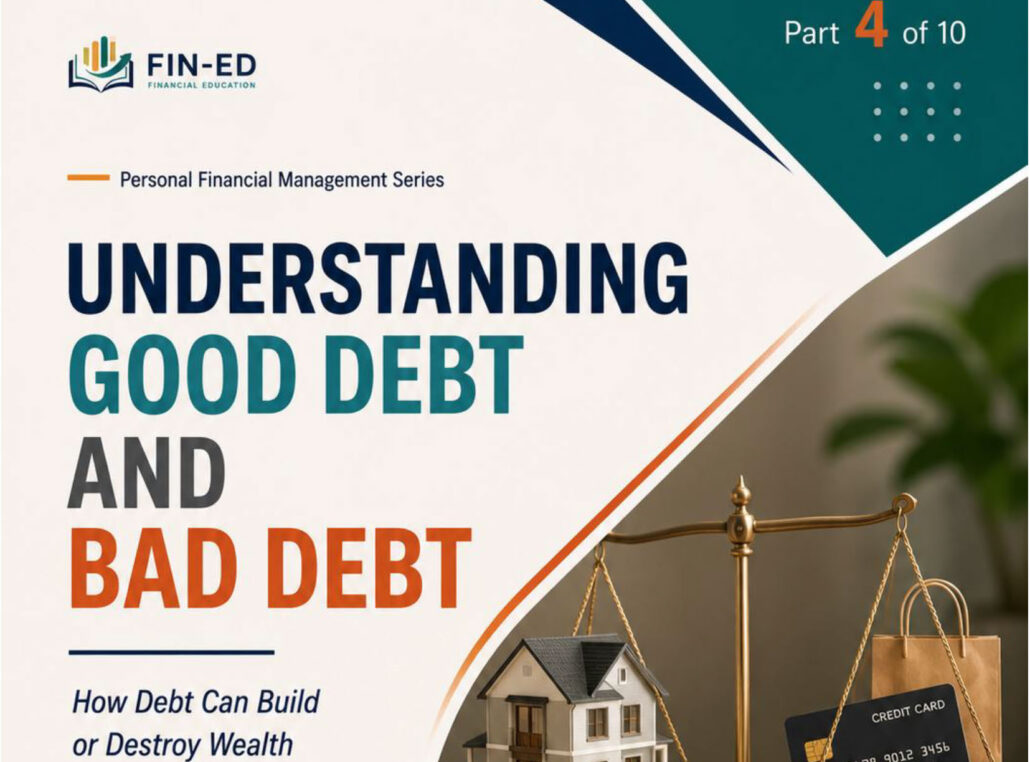
How Debt Can Build or Destroy Wealth
Debt is often viewed as something negative. Many financial commentators encourage people to avoid debt at all costs, while others believe that debt is a necessary tool for building wealth.
The truth lies somewhere in between.
Debt itself is neither good nor bad. What matters is how it is used.
Used wisely, debt can help individuals acquire assets, grow businesses, and build long-term wealth. Used irresponsibly, debt can create financial stress, limit opportunities, and prevent wealth accumulation.
Understanding the difference between good debt and bad debt is one of the most important principles of personal financial management.
What Is Debt?
Debt simply means borrowing money that must be repaid, usually together with interest. Common forms of debt include:
- Home
- Vehicle
- Credit
- Personal
- Student
- Business
- Store
- Overdraft
The key question is not whether you have debt, but whether the debt is helping or harming your
Understanding Good Debt
Good debt is generally debt that helps you acquire an asset or improve your future earning potential.
Examples may include:
Home Loans
Property has historically been an effective way for many families to build wealth over the long term.
Although a home loan incurs interest costs, it allows individuals to acquire an asset that may appreciate in value over time.
In addition, each bond repayment gradually increases the owner’s equity in the property.
Education and Skills Development
Investing in education, qualifications, and professional development can significantly increase earning potential over a lifetime.
A carefully considered education loan may therefore provide long-term benefits that exceed the cost of borrowing.
Business Funding
Business owners often use debt to expand operations, acquire equipment, or increase production capacity.
Provided the borrowing generates returns that exceed the financing costs, business debt can be a valuable wealth-creation tool.
The common characteristic of good debt is that it is used to acquire or create something that
Understanding Bad Debt
Bad debt is generally debt used to purchase items that decline in value or provide only short-term satisfaction.
Examples include:
Credit Card Debt
Credit cards can be useful financial tools when managed responsibly.
However, carrying long-term credit card balances often results in extremely high interest costs that can quickly become difficult to manage.
Personal Loans for Consumption
Borrowing money to fund holidays, entertainment, luxury purchases, or lifestyle expenses often creates financial pressure without generating any future financial benefit.
Store Accounts
Retail accounts frequently encourage spending on non-essential items while charging high interest rates.
Many consumers underestimate the long-term cost of financing purchases through store accounts.
Lifestyle Debt
One of the most common financial mistakes is using debt to maintain a lifestyle that exceeds one’s income.
Financing holidays, clothing, electronics, and other discretionary purchases may provide temporary enjoyment but can create long-term financial strain.
The common characteristic of bad debt is that the borrowed money is used to purchase something that decreases in value while the debt remains.
The Real Cost of Interest
One of the reasons debt becomes so dangerous is that many people focus on the monthly repayment rather than the total cost.
For example:
A vehicle purchased for R500,000 may ultimately cost significantly more once interest charges are included.
Similarly, carrying a credit card balance for several years can result in paying substantially more than the original purchase price.
Before taking on debt, it is important to understand:
- The interest
- The repayment
- The total repayment
- The impact on monthly cash
A decision that appears affordable today may have long-term consequences.
Debt and Wealth Creation
One of the simplest ways to assess debt is to ask the following question: “Will this debt improve my financial position five years from now?”
If the answer is yes, the debt may be productive.
If the answer is no, it may simply be delaying future financial progress. Successful wealth builders generally use debt selectively and strategically.
They understand that every rand used to service unnecessary debt is a rand that cannot be saved, invested, or used to build wealth.
Paying Off Debt Strategically
Many people have multiple debts and are unsure where to start. A practical strategy is to:
- Continue making minimum payments on all
- Direct any additional funds towards the debt with the highest interest rate.
- Once that debt is settled, redirect those payments towards the next
This approach minimises total interest costs and accelerates debt reduction.
For some individuals, focusing on smaller debts first may provide psychological motivation. The most important factor is maintaining consistent progress.
Avoiding the Debt Trap
Debt problems rarely arise overnight.
They typically develop gradually through a series of small decisions. Warning signs may include:
- Frequently using credit to cover monthly
- Paying only minimum
- Taking new loans to repay existing
- Having little or no
- Constantly feeling financially
Recognising these warning signs early allows corrective action before the situation becomes
The Role of Debt in a Financial Plan
Debt should be viewed as a tool rather than a lifestyle.
When used responsibly, debt can help achieve important goals such as home ownership, education, and business growth.
However, debt should never replace sound financial planning. Before taking on new debt, consider:
- Is the purchase necessary?
- Can I comfortably afford the repayments?
- Will this improve my long-term financial position?
- Would saving first be a better option?
These questions can help prevent costly financial mistakes.
Financial Freedom and Debt
Many people dream of financial independence, yet continue to accumulate unnecessary debt.
Financial freedom is not simply about earning more money. It is about reducing financial obligations and increasing control over your resources.
Every debt that is repaid improves your cash flow and creates greater flexibility for saving, investing, and achieving future goals.
The less money committed to servicing debt, the more money available for building wealth.
Key Takeaways
- Debt is neither good nor bad; its value depends on how it is
- Good debt helps acquire assets or increase future earning
- Bad debt typically finances consumption and depreciating
- Interest can significantly increase the true cost of
- Debt should support wealth creation, not lifestyle
- A structured debt repayment strategy can accelerate financial
- Financial freedom becomes easier to achieve as debt obligations
FinEd – Empowering Better Financial Decisions Through Education
This article is intended for educational purposes only and should not be construed as financial, tax, accounting or legal advice. Professional advice should be obtained before implementing any financial strategy.